
www.indo-industry.com
06
'26
Written on Modified on
ANDRITZ to Supply Coarse Reject Treatment System to P.T. Suparma Tbk
P.T. Suparma Tbk selected ANDRITZ to provide a complete coarse reject treatment system for its recycled-fiber-based paper mill in Surabaya, Indonesia.
www.andritz.com
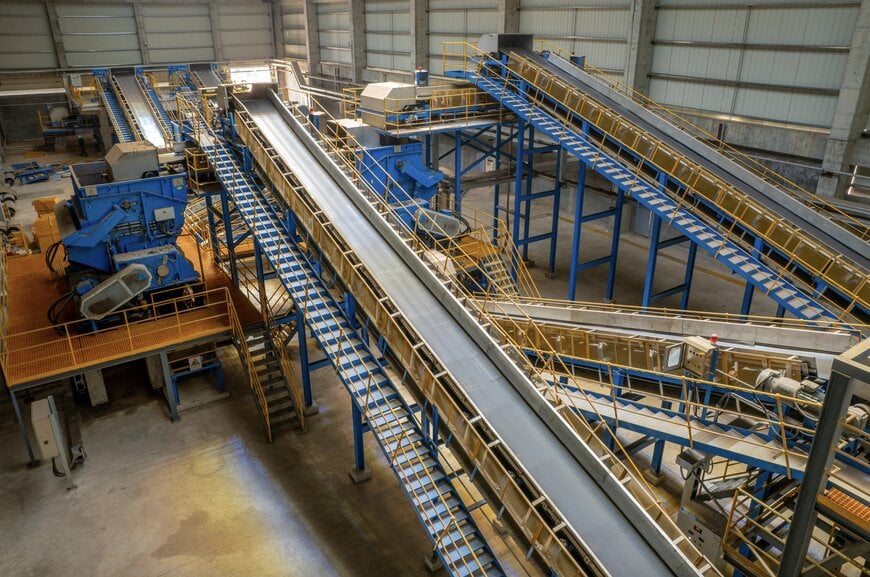
P.T. Suparma Tbk has selected international technology group ANDRITZ to supply a complete coarse reject treatment system for its recycled-fiber-based paper mill in Surabaya, East Java, Indonesia.
The newly commissioned system is designed to process coarse rejects originating from the mill’s drum pulping line. The technology handles heterogeneous waste streams, which comprise mixed plastics and various other contaminants. By implementing an integrated dry-process configuration, the system reduces handling complexity and ensures consistent output quality for subsequent processing stages.
Specialized Equipment and Operational Efficiency
The treatment line incorporates specific machinery to optimize reject management and resource efficiency:
- ReCo Reject Compactor: This unit performs high-efficiency mechanical dewatering, which significantly lowers the volume of material for downstream handling.
- ADuro P Shredder: This component provides contaminant-tolerant size reduction to create a uniform feed. The equipment is designed to facilitate effective metal separation and final reject processing.
These technologies are intended to stabilize mill operations and reduce the environmental impact of waste management. The solution focus is on maintaining high equipment availability and fraction purity while achieving low energy consumption.
Project Timeline and Strategic Alignment
Start-up for the new installation in Surabaya, East Java, is scheduled for the third quarter of 2026. The order reinforces the position of ANDRITZ as a supplier of recycling and reject treatment solutions within the Southeast Asian market.
Additional Context
In the recycled paper industry, drum pulping is a critical initial stage where recovered paper is broken down into fibers. This process inevitably generates "rejects"—non-fibrous materials like plastics, staples, and adhesives that must be removed to ensure paper quality. Managing these rejects is a significant operational challenge; untreated, wet rejects are heavy and expensive to transport or incinerate.
Mechanical dewatering and shredding are standard industrial methods used to transform these waste streams into more manageable forms. Reducing the moisture content through compaction not only decreases the weight for disposal but can also increase the caloric value if the rejects are destined for waste-to-energy applications. Furthermore, uniform size reduction via shredding is a technical prerequisite for automated sorting technologies, such as magnetic or optical separators, which recover metals and other recyclable fractions, supporting circular economy objectives in industrial manufacturing.
Edited by Romila DSilva, Induportals Editor, with AI assistance.
Project Timeline and Strategic Alignment
Start-up for the new installation in Surabaya, East Java, is scheduled for the third quarter of 2026. The order reinforces the position of ANDRITZ as a supplier of recycling and reject treatment solutions within the Southeast Asian market.
Additional Context
In the recycled paper industry, drum pulping is a critical initial stage where recovered paper is broken down into fibers. This process inevitably generates "rejects"—non-fibrous materials like plastics, staples, and adhesives that must be removed to ensure paper quality. Managing these rejects is a significant operational challenge; untreated, wet rejects are heavy and expensive to transport or incinerate.
Mechanical dewatering and shredding are standard industrial methods used to transform these waste streams into more manageable forms. Reducing the moisture content through compaction not only decreases the weight for disposal but can also increase the caloric value if the rejects are destined for waste-to-energy applications. Furthermore, uniform size reduction via shredding is a technical prerequisite for automated sorting technologies, such as magnetic or optical separators, which recover metals and other recyclable fractions, supporting circular economy objectives in industrial manufacturing.
Edited by Romila DSilva, Induportals Editor, with AI assistance.
