
www.indo-industry.com
18
'25
Written on Modified on
Inclusive Rail Logistics and Digital Ticketing at KAI
Indonesia expands commuter rail logistics and biometric boarding to support small-scale commerce, peak-season capacity management, and paperless operations.
kai.id
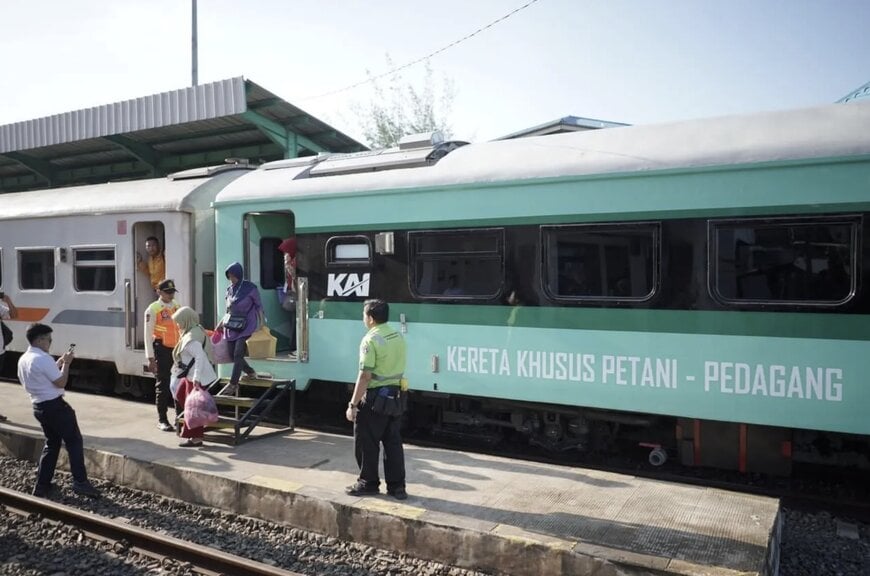
Farmer-Trader train to facilitate the movement of agricultural goods, processed food, and small-scale merchandise by providing dedicated cargo space within a commuter railway environment.
PT Kereta Api Indonesia (KAI) introduced two operational initiatives combining inclusive logistics and passenger automation: a cargo-enabled commuter service for small producers on the Merak Line and an expanded facial recognition boarding system to manage peak travel demand more efficiently.
Commuter rail adapted for small-scale goods movement
From 1 December 2025, KAI began operating a Farmer and Trader Train on the Merak–Rangkasbitung corridor in Banten Province. The service integrates dedicated cargo space into existing commuter operations to support farmers and micro-entrepreneurs moving agricultural produce, processed foods, and small merchandise to regional markets.
The rolling stock was redesigned at KAI’s Balai Yasa Surabaya Gubeng workshop. Modifications included reconfigured interiors, reinforced baggage areas, dedicated loading and unloading access, and updated safety signage, allowing goods transport without interfering with passenger circulation. The service operates under a government-funded Public Service Obligation (PSO) scheme with a flat fare of Rp3,000, permitting up to two cargo units per user.
The train is coupled to 14 daily Merak Commuter Line services and serves 11 stations across coastal and agricultural zones. On its first day, 95 users transported produce, snacks, and handicrafts to markets in Serang, Cilegon, and Merak. By shifting short-distance distribution from road to rail, KAI expects more predictable delivery times and lower reliance on road-based logistics for local supply chains.
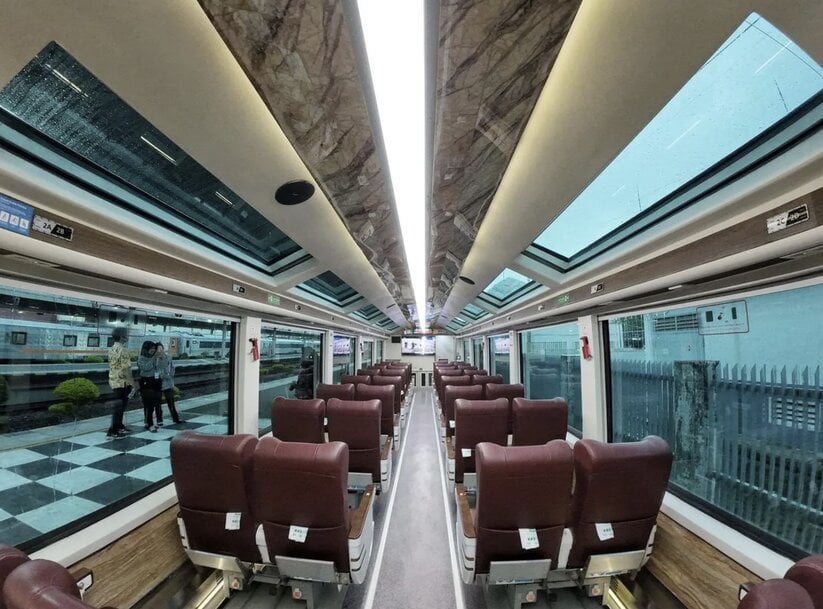
A special passenger train featuring oversized windows and often a large glass roof (sunroof) to provide unobstructed, wide-angle views of the passing scenery, turning the journey itself into a scenic experience.
Digital boarding as a capacity management tool
Alongside logistics integration, KAI expanded facial recognition boarding to streamline passenger processing and reduce paper consumption. Between January and October 2025, the system recorded 9.29 million uses, cutting ticket paper consumption by 23,245 rolls and delivering cost savings of approximately Rp341 million. Since its introduction in 2023, cumulative usage reached 19.4 million passengers.
The technology is deployed at 22 stations and is being scaled ahead of the 2025/2026 Christmas and New Year travel period. By automating identity verification at gates, KAI reduces boarding time and queue length during demand spikes while supporting paperless operations as part of a broader digital mobility strategy.
Preparing rail capacity for year-end demand
For the holiday period from 18 December 2025 to 4 January 2026, ticket demand increased steadily. As of 26 November, KAI sold 629,060 tickets, representing 21.15% of the approximately 3 million seats available. To maintain affordability and distribute demand, the operator applied 30% fare reductions across 156 regular services and added 26 economy-class trains, providing around 1.5 million discounted seats valid from 22 December to 10 January.
These measures are intended to stabilize operations across Java and Sumatra during peak travel while balancing capacity utilization and fare accessibility.
Aligning inclusive services with rail digitalization
By pairing commuter-based logistics for small producers with biometric boarding automation, KAI addressed two structural challenges in national rail transport: access to reliable distribution channels for grassroots economies and the need to manage high passenger volumes with lower material consumption. The combined approach reflects a shift toward digitally enabled, inclusive rail systems aligned with international railway modernization practices, where operational efficiency and social impact are treated as complementary objectives.
www.kai.id
PT Kereta Api Indonesia (KAI) introduced two operational initiatives combining inclusive logistics and passenger automation: a cargo-enabled commuter service for small producers on the Merak Line and an expanded facial recognition boarding system to manage peak travel demand more efficiently.
Commuter rail adapted for small-scale goods movement
From 1 December 2025, KAI began operating a Farmer and Trader Train on the Merak–Rangkasbitung corridor in Banten Province. The service integrates dedicated cargo space into existing commuter operations to support farmers and micro-entrepreneurs moving agricultural produce, processed foods, and small merchandise to regional markets.
The rolling stock was redesigned at KAI’s Balai Yasa Surabaya Gubeng workshop. Modifications included reconfigured interiors, reinforced baggage areas, dedicated loading and unloading access, and updated safety signage, allowing goods transport without interfering with passenger circulation. The service operates under a government-funded Public Service Obligation (PSO) scheme with a flat fare of Rp3,000, permitting up to two cargo units per user.
The train is coupled to 14 daily Merak Commuter Line services and serves 11 stations across coastal and agricultural zones. On its first day, 95 users transported produce, snacks, and handicrafts to markets in Serang, Cilegon, and Merak. By shifting short-distance distribution from road to rail, KAI expects more predictable delivery times and lower reliance on road-based logistics for local supply chains.
A special passenger train featuring oversized windows and often a large glass roof (sunroof) to provide unobstructed, wide-angle views of the passing scenery, turning the journey itself into a scenic experience.
Digital boarding as a capacity management tool
Alongside logistics integration, KAI expanded facial recognition boarding to streamline passenger processing and reduce paper consumption. Between January and October 2025, the system recorded 9.29 million uses, cutting ticket paper consumption by 23,245 rolls and delivering cost savings of approximately Rp341 million. Since its introduction in 2023, cumulative usage reached 19.4 million passengers.
The technology is deployed at 22 stations and is being scaled ahead of the 2025/2026 Christmas and New Year travel period. By automating identity verification at gates, KAI reduces boarding time and queue length during demand spikes while supporting paperless operations as part of a broader digital mobility strategy.
Preparing rail capacity for year-end demand
For the holiday period from 18 December 2025 to 4 January 2026, ticket demand increased steadily. As of 26 November, KAI sold 629,060 tickets, representing 21.15% of the approximately 3 million seats available. To maintain affordability and distribute demand, the operator applied 30% fare reductions across 156 regular services and added 26 economy-class trains, providing around 1.5 million discounted seats valid from 22 December to 10 January.
These measures are intended to stabilize operations across Java and Sumatra during peak travel while balancing capacity utilization and fare accessibility.
Aligning inclusive services with rail digitalization
By pairing commuter-based logistics for small producers with biometric boarding automation, KAI addressed two structural challenges in national rail transport: access to reliable distribution channels for grassroots economies and the need to manage high passenger volumes with lower material consumption. The combined approach reflects a shift toward digitally enabled, inclusive rail systems aligned with international railway modernization practices, where operational efficiency and social impact are treated as complementary objectives.
www.kai.id
